Food, especially a cuisine that I do not often eat, transports me to the culture from which it comes. In D.C., we were encouraged to go a restaurant specializing in the cuisine of the country to which we would be going. The restaurant serving Uruguayan food was expensive, so some of the members in the Fulbright Uruguay cohort decided on going to a more affordable Ethiopian restaurant called Gursha.
I had Ethiopian food a couple of times back when I lived in Chicago, and loved it. I recall the spongy, sour bread (injera) used to scoop up the soothing, yet spicy lentil dishes. This time around, I got a bowl with a sampling of beef, fasiola (string bean), kik alich (split chickpea), misir (spicy lentil), and rice.

I’m a real big fan of lentil and string bean dishes, so this was extremely satisfying, and definitely one of my favorite meals I have ever eaten. No injera this time around, except for one bite from a fellow Fulbrighter’s dish.
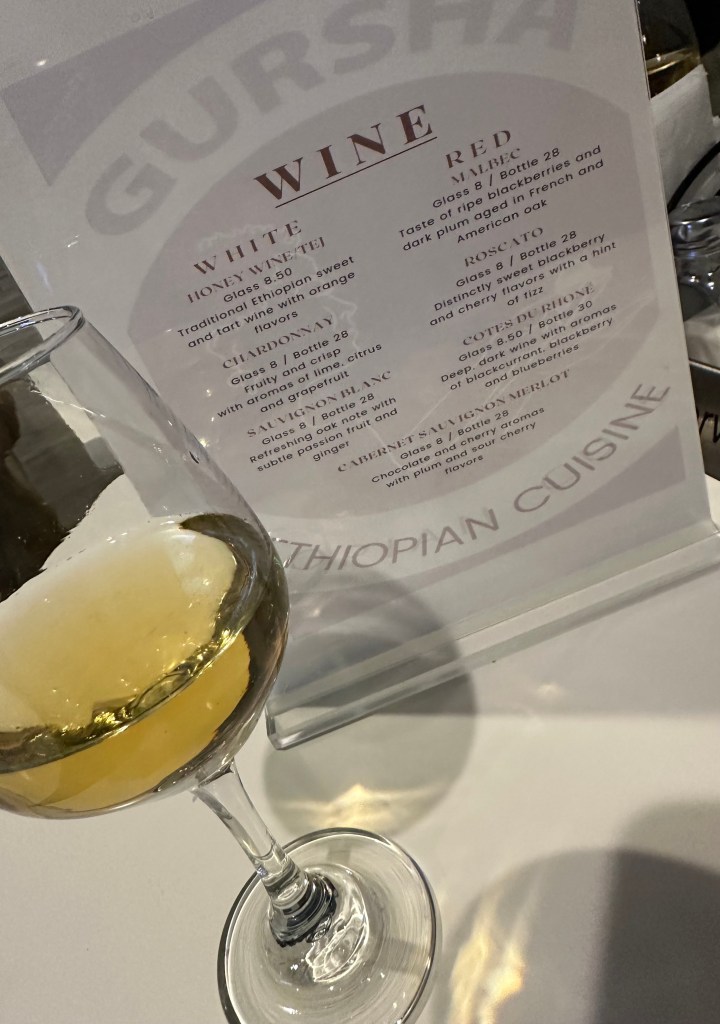
This Tej (honey wine) complemented the flavors in the bowl so well. I’m not a wine connoisseur, but it was definitely crisp and fruity. Tej is an Ethiopian wine consisting of fermented honey, water, and gesho, a shrub that provides a bitter taste. What a delight!
I looked up gursha and discovered it is an Amharic word that literally means mouthful. Gursha refers to the Ethiopian tradition of feeding or receiving a mouthful of food. This is a gesture of love and care that promotes connection, community, and unity.
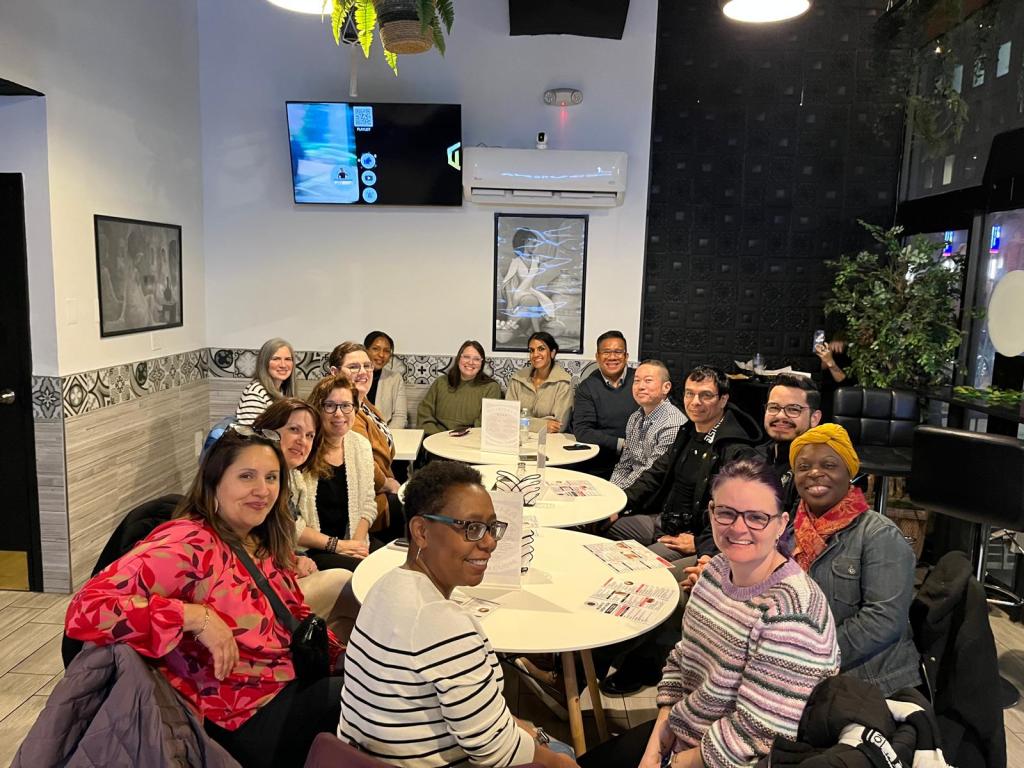
The Ethiopian idea of gursha as a form of bonding is similar to what our cohort would be experiencing with Uruguayan asado. We had a nice time getting to know each other over this wonderful Ethiopian meal, and all felt the excitement, and concern, of our upcoming travel abroad.

Thorough descriptions of Ethiopian gursha:
 Uyehara in Uruguay